
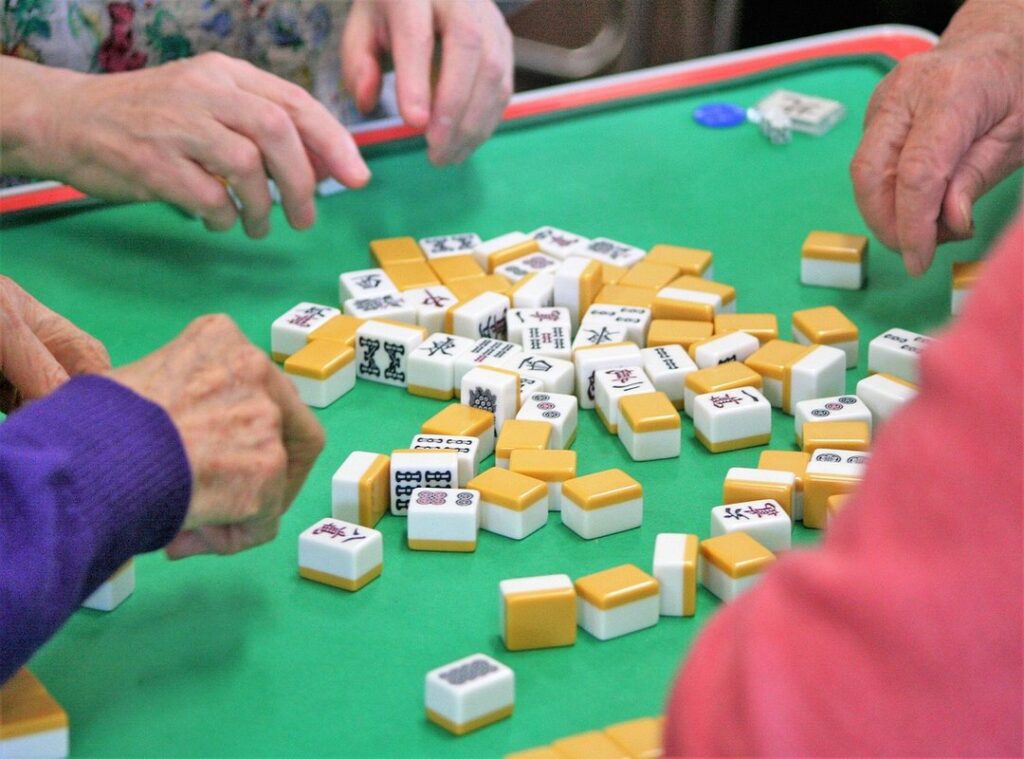
The clack of mahjong tiles on the table is a sound that instantly draws you in. It’s not just the game; it’s the social energy, the laughter, and the friendly competition. Mahjong is a tile-based game of skill, strategy, and luck that has been enjoyed for generations.
This guide is for absolute beginners who want to learn how to play. We’ll focus on the American version, which is popular and easy to pick up. By the end of this guide, you’ll understand the basic rules, the tiles, and how to play your first hand.
Mahjong is more than just a game. It’s a perfect way to keep your mind sharp and connect with friends. So, let’s get started and dive into the world of mahjong aarp.
What is Mahjong and Why is it So Popular?
Mahjong is a game for four players, much like Rummy but with tiles instead of cards. It’s all about strategy and a bit of luck.
The game originated in China and has evolved into various versions around the world. In the U.S., American Mahjong is particularly popular.
The primary goal is to be the first player to form a complete hand of specific tile groupings, called a “Mahjong.” It’s a satisfying moment when you finally get that winning combination.
Playing Mahjong boosts cognitive skills like memory and pattern recognition. The tiles clink softly as you arrange them, and the smooth, cool feel of each piece adds to the sensory experience.
It’s also a fantastic way to build community. The chatter and laughter around the table make it a social event. You can hear the tiles shuffle and the occasional excited shout when someone gets a good hand.
For active adults, Mahjong is more than just a game. It’s a regular, enjoyable way to spend time with friends. The mahjong aarp groups are a great example of how the game brings people together.
So, why not give it a try? You might find yourself hooked on the mix of strategy, fun, and friendship.
Understanding the Mahjong Tiles and Equipment
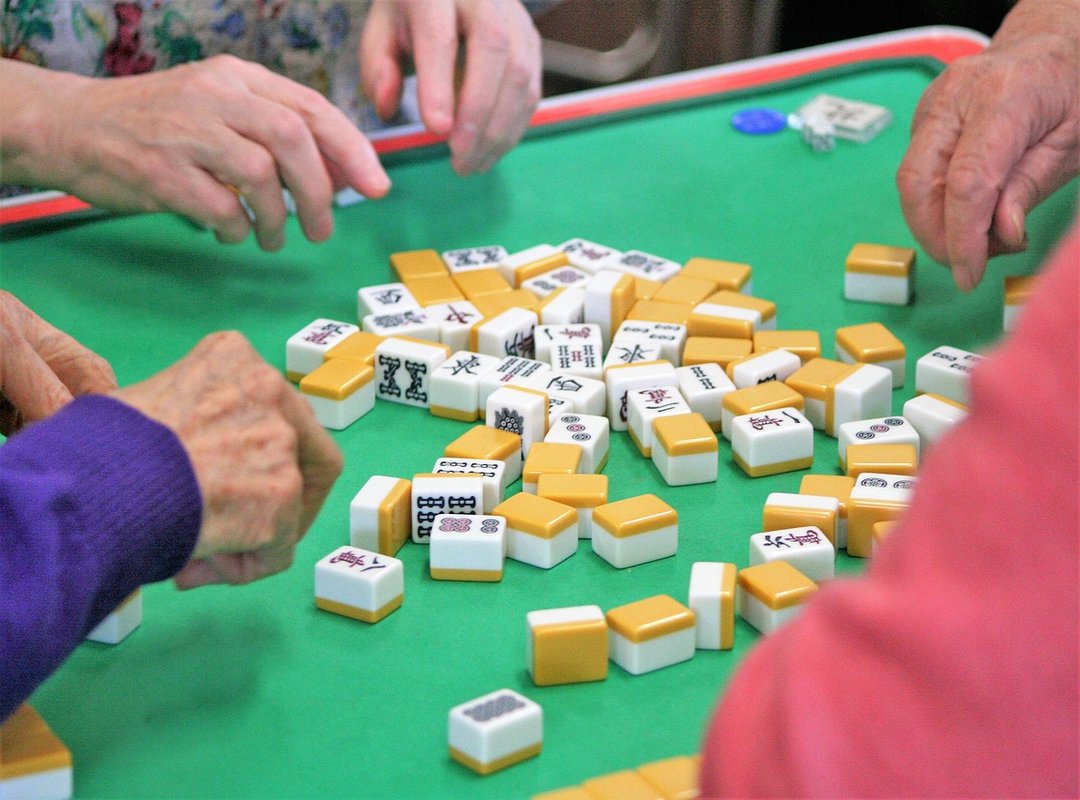
When I first started playing mahjong, I was overwhelmed by the sheer number of tiles. The standard 152-tile American Mahjong set can be a lot to handle.
The three main suits are Bams (Bamboos), Cracks (Characters), and Dots (Circles). Each suit is numbered 1 through 9, and simple enough, right?
But it took me a while to get the hang of it.
I remember one game where I kept mixing up the Bams and Dots. It was embarrassing. My friends were patient, but I could tell they were getting frustrated.
Lesson learned: take your time to familiarize yourself with the tiles.
Then there are the Honor tiles. Winds (North, East, South, West) and Dragons (Red, Green, White/Soap) add another layer of complexity. These tiles don’t have numbers, so you need to recognize them by their symbols.
One mistake I made early on was not paying attention to the Bonus tiles. Flowers and Seasons are unique to the American version and play a special role in scoring. Ignoring them can cost you points.
Trust me, I learned this the hard way.
Besides the tiles, you’ll need racks for holding them, dice for breaking the wall, and the official National Mah Jongg League (NMJL) card. This card lists the valid winning hands for the year.
I once played a game without the NMJL card. Let’s just say it didn’t end well. We had no idea what hands were valid, and the game turned into a mess. Doayods
Always have the card handy.
Lastly, if you’re part of a group like mahjong aarp, make sure everyone is on the same page about the rules. Consistency is key.
How to Play a Basic Hand of American Mahjong
I remember the first time I played mahjong. It was at my aunt’s house, and she had this beautiful set that looked like it had been passed down for generations. She taught me the basics, and I was hooked.
First things first, you need to set up the game. You build four walls with the tiles, each two tiles high and 18 tiles long. It’s like creating a little fortress on the table.
Next, roll the dice to determine who breaks the wall. The player with the highest roll gets to do this. They take the top four tiles from the wall and place them face-down.
Then, they turn over the next tile and count that many tiles from the right end of the wall. This is where the deal starts.
Dealing the tiles is straightforward, and each player gets 13 tiles. The dealer takes 14 but discards one immediately.
Now, everyone has their starting hand, and the real fun begins.
Before the game officially starts, there’s something called the Charleston. It’s a unique passing of tiles that helps improve your starting hand. You pass three tiles to the player on your right, then to the player across from you, and finally to the player on your left.
It’s a bit like trading cards, but with more strategy.
The core gameplay loop is simple. Players take turns drawing a tile from the wall and then discarding a tile from their hand, placing it face-up in the center. The goal is to match one of the specific hands on the annual NMJL card.
There are key tile combinations you aim to collect. A Pung is three identical tiles, a Kung is four identical tiles, a Quint is five identical tiles, and a Pair is two identical tiles. These combinations help you form a valid hand.
When you complete a valid hand, you call out Mahjong. It’s a thrilling moment, especially when you’ve been working on your hand for a while.
One of the most strategic parts of the game is calling for a discarded tile to complete a set. If someone discards a tile you need, you can claim it. But be careful; if another player also needs that tile, they might beat you to it.
Playing mahjong aarp is a great way to keep your mind sharp and enjoy some friendly competition. It’s a game that’s easy to learn but takes a lifetime to master.
Where to Play Mahjong Online and In-Person
Finding local Mahjong groups can be as simple as checking with local senior centers, community clubs, or libraries. These places often host regular games and are welcoming to new players.
Use online platforms like Meetup.com to find or even start a Mahjong group in your area. It’s a great way to connect with other enthusiasts and organize meetups.
For beginners looking to practice their skills, there are several user-friendly websites where you can play Mahjong online for free. mahjong aarp offers a straightforward way to get started without needing a physical set. Another popular option is Mahjong.com, which provides a variety of game styles and levels.
Don’t be intimidated by the game. Most experienced players are happy to teach newcomers. Seek out beginner-friendly groups and enjoy the learning process.
 Joseph Grimesapher has opinions about digital innovation pathways. Informed ones, backed by real experience — but opinions nonetheless, and they doesn't try to disguise them as neutral observation. They thinks a lot of what gets written about Digital Innovation Pathways, Device Optimization Techniques, Doayods Edge Computing Strategies is either too cautious to be useful or too confident to be credible, and they's work tends to sit deliberately in the space between those two failure modes.
Reading Joseph's pieces, you get the sense of someone who has thought about this stuff seriously and arrived at actual conclusions — not just collected a range of perspectives and declined to pick one. That can be uncomfortable when they lands on something you disagree with. It's also why the writing is worth engaging with. Joseph isn't interested in telling people what they want to hear. They is interested in telling them what they actually thinks, with enough reasoning behind it that you can push back if you want to. That kind of intellectual honesty is rarer than it should be.
What Joseph is best at is the moment when a familiar topic reveals something unexpected — when the conventional wisdom turns out to be slightly off, or when a small shift in framing changes everything. They finds those moments consistently, which is why they's work tends to generate real discussion rather than just passive agreement.
Joseph Grimesapher has opinions about digital innovation pathways. Informed ones, backed by real experience — but opinions nonetheless, and they doesn't try to disguise them as neutral observation. They thinks a lot of what gets written about Digital Innovation Pathways, Device Optimization Techniques, Doayods Edge Computing Strategies is either too cautious to be useful or too confident to be credible, and they's work tends to sit deliberately in the space between those two failure modes.
Reading Joseph's pieces, you get the sense of someone who has thought about this stuff seriously and arrived at actual conclusions — not just collected a range of perspectives and declined to pick one. That can be uncomfortable when they lands on something you disagree with. It's also why the writing is worth engaging with. Joseph isn't interested in telling people what they want to hear. They is interested in telling them what they actually thinks, with enough reasoning behind it that you can push back if you want to. That kind of intellectual honesty is rarer than it should be.
What Joseph is best at is the moment when a familiar topic reveals something unexpected — when the conventional wisdom turns out to be slightly off, or when a small shift in framing changes everything. They finds those moments consistently, which is why they's work tends to generate real discussion rather than just passive agreement.