I get it. You’re a soccer fan, and you want to draw Kylian Mbappé. He’s a superstar, and his energy on the field is contagious.
This guide is for you, even if you’ve never picked up a pencil before.
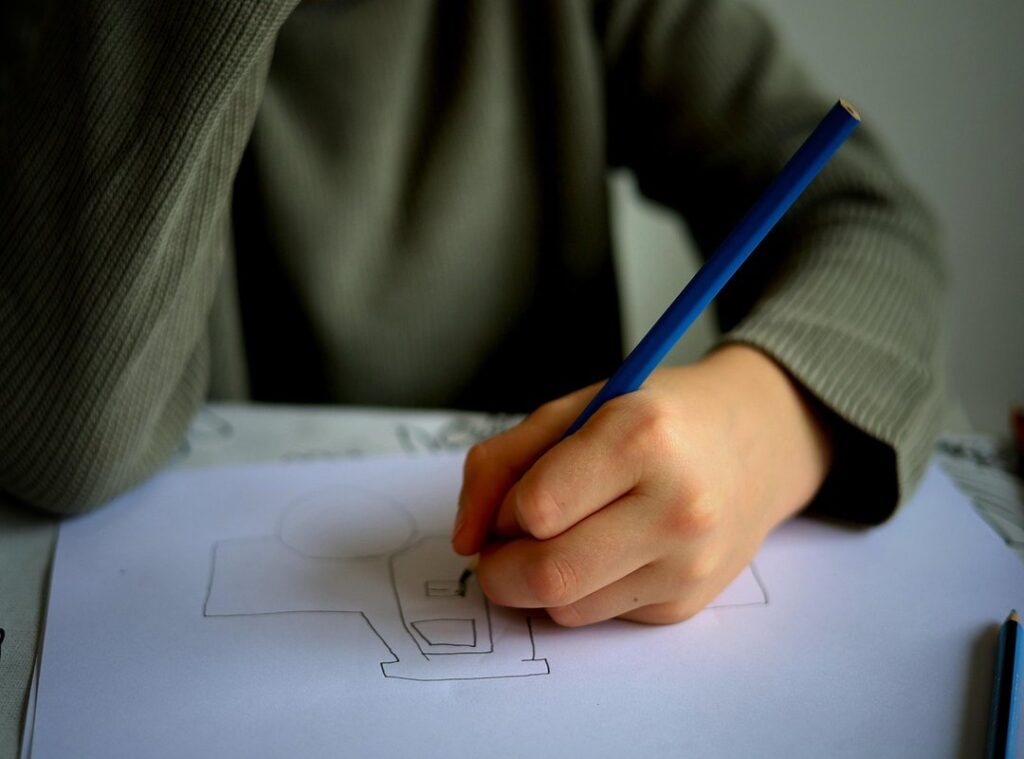
No fancy art supplies needed. Just grab a standard pencil, a good eraser, and a plain sheet of paper. That’s it.
We’ll start with basic shapes and work our way to the finishing details.
By the end, you’ll have a drawing of mbappe tekenen makkelijk that you can be proud of. Trust me, it’s easier than you think.
Step 1: Building the Basic Framework of Your Drawing
Let’s start by lightly sketching a simple oval shape in the center of your paper. This will serve as the foundation for the head. Next, draw a vertical line down the middle of the oval and a horizontal line across the center.
These lines will help you place the facial features accurately.
Now, sketch two simple lines down from the head to form the neck. Connect these to a basic trapezoid shape for the shoulders and upper chest. Keeping all these initial construction lines very light is crucial.
You’ll be erasing them later, so make sure they’re faint.
Pro tip: For a realistic athletic build, make the shoulders roughly two to three times the width of the head. This proportion gives a balanced and natural look.
Remember, the goal here is to create a basic framework. It doesn’t need to be perfect. The key is to get the proportions right and set yourself up for success as you add more details.
If you’re following along with something like mbappe tekenen makkelijk, this step is your starting point. Keep it simple and focus on getting the basic shapes and lines in place.
Step 2: Capturing Mbappé’s Recognizable Facial Features
Let’s start with the eyes. Using the horizontal guideline, place them symmetrically on either side. His eyes have an almond shape, so make sure to get that right.
Add simple circles for pupils, focusing on capturing his focused expression.
Next, move on to the nose. Position it on the vertical guideline just below the eye line. Focus on the basic shape of the bridge and nostrils.
No need for complex shading here.
The mouth is often seen in a wide, confident smile. Place it between the nose and the bottom of the chin. Keep it simple but expressive.
Now, add the ears. Align the top of the ears with the eye line and the bottom with the base of the nose. This placement helps keep the proportions accurate.
Finally, draw his distinct eyebrows. They contribute significantly to his overall expression and intensity. Make sure they’re bold and well-defined. mbappe tekenen makkelijk
Remember, mbappe tekenen makkelijk is all about keeping it simple and focusing on the key features.
Step 3: Adding His Signature Hairstyle and Jersey

Let’s start with Mbappé’s very short, cropped hairstyle. Focus on the hairline—it should be clean and precise, running smoothly across his forehead. Use short, quick pencil strokes or light stippling to add texture.
This gives his hair that realistic, close-cut look.
Imagine the feel of the pencil as it darts across the paper, creating those tiny, crisp lines.
Next, draw the collar of his soccer jersey. Whether it’s a simple V-neck or a rounded crew neck, make sure it fits snugly around his neck. The collar should look like it’s part of the jersey, not just an afterthought.
Now, add the main lines for the jersey. Outline the seams on the shoulders and the sleeves. These lines should be smooth but not too perfect.
A little bit of roughness can make the drawing more natural and less stiff.
Think about how the fabric might move and crease slightly as he runs.
Finally, add a simplified version of a team crest or his number. This makes the drawing instantly recognizable without getting bogged down in tiny details. For example, if you’re drawing him in a PSG kit, a small, stylized Eiffel Tower or the number 7 can do the trick.
Remember, the key is to capture the essence, not every detail.
Drawing Mbappé’s features and jersey this way will make your mbappe tekenen makkelijk experience much more rewarding.
Step 4: Bringing Your Drawing to Life with Final Touches
Basic shading is key to giving your drawing a three-dimensional look. Start by adding light shading under the chin, on the side of the nose, and in the hair. This creates depth and realism.
Now that the main features are in place, carefully erase all the initial guidelines. This includes the oval and the cross lines.
Go back over the most important final lines, such as the jawline, eyes, and jersey outline. Make them darker and more defined to make the drawing ‘pop’.
A pro-tip: Add a reflection point (a small white dot) in each pupil. This makes the eyes look more alive and realistic.
Finally, take a moment to review your drawing. Clean up any stray marks and strengthen the key features.
mbappe tekenen makkelijk
 Johner Keeleyowns writes the kind of device optimization techniques content that people actually send to each other. Not because it's flashy or controversial, but because it's the sort of thing where you read it and immediately think of three people who need to see it. Johner has a talent for identifying the questions that a lot of people have but haven't quite figured out how to articulate yet — and then answering them properly.
They covers a lot of ground: Device Optimization Techniques, Tech Concepts and Frameworks, Doayods Edge Computing Strategies, and plenty of adjacent territory that doesn't always get treated with the same seriousness. The consistency across all of it is a certain kind of respect for the reader. Johner doesn't assume people are stupid, and they doesn't assume they know everything either. They writes for someone who is genuinely trying to figure something out — because that's usually who's actually reading. That assumption shapes everything from how they structures an explanation to how much background they includes before getting to the point.
Beyond the practical stuff, there's something in Johner's writing that reflects a real investment in the subject — not performed enthusiasm, but the kind of sustained interest that produces insight over time. They has been paying attention to device optimization techniques long enough that they notices things a more casual observer would miss. That depth shows up in the work in ways that are hard to fake.
Johner Keeleyowns writes the kind of device optimization techniques content that people actually send to each other. Not because it's flashy or controversial, but because it's the sort of thing where you read it and immediately think of three people who need to see it. Johner has a talent for identifying the questions that a lot of people have but haven't quite figured out how to articulate yet — and then answering them properly.
They covers a lot of ground: Device Optimization Techniques, Tech Concepts and Frameworks, Doayods Edge Computing Strategies, and plenty of adjacent territory that doesn't always get treated with the same seriousness. The consistency across all of it is a certain kind of respect for the reader. Johner doesn't assume people are stupid, and they doesn't assume they know everything either. They writes for someone who is genuinely trying to figure something out — because that's usually who's actually reading. That assumption shapes everything from how they structures an explanation to how much background they includes before getting to the point.
Beyond the practical stuff, there's something in Johner's writing that reflects a real investment in the subject — not performed enthusiasm, but the kind of sustained interest that produces insight over time. They has been paying attention to device optimization techniques long enough that they notices things a more casual observer would miss. That depth shows up in the work in ways that are hard to fake.