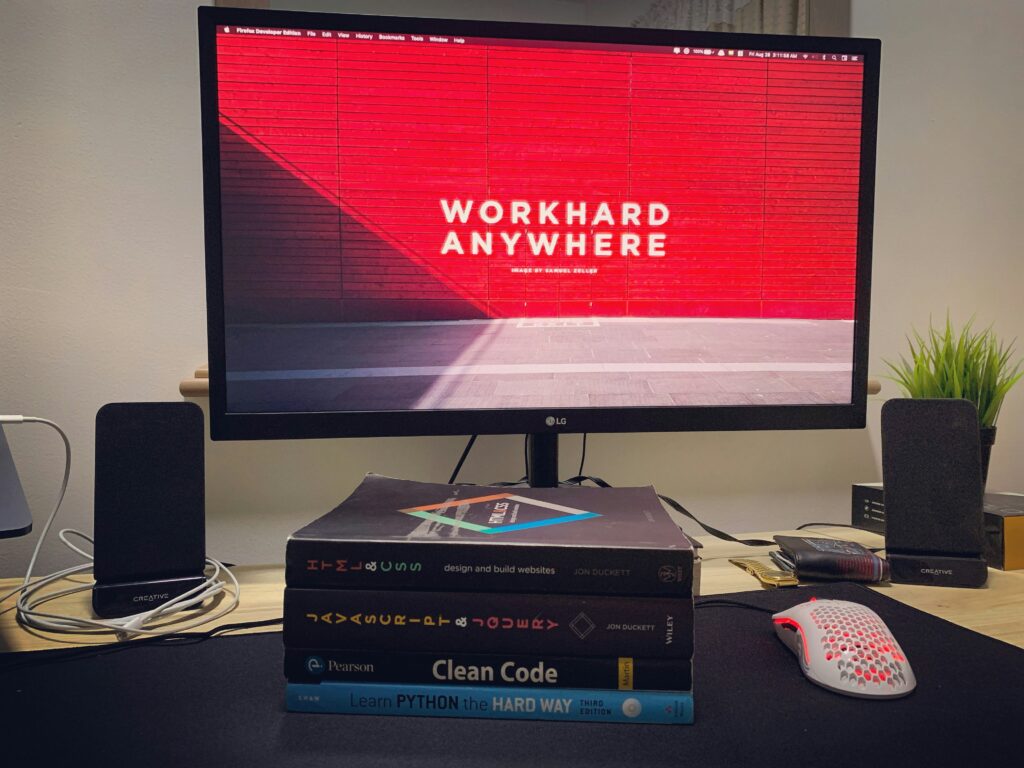

You’re staring at that blank editor screen.
And already thinking: What if I’m just not cut out for this?
I’ve heard that exact sentence from every beginner I’ve ever taught. Every. Single.
One.
It’s not your fault. Most Python guides assume you already know what a terminal is. Or how to install anything without breaking your computer.
This isn’t one of those guides.
This is the New Llusyep Python approach. Built for people who’ve never typed a line of code.
I’ve taught over 400 absolute beginners. I know where they freeze. I know which error messages make them close the tab forever.
So we skip the jargon. We avoid the rabbit holes. We start with one working line (and) build from there.
By the end of this article, you’ll have Python running on your machine.
You’ll write a real program.
And it’ll run.
No setup surprises. No “just install this random thing and hope.”
Just you. Your computer. And your first real Python program.
Done.
Why Python Feels Like Talking to Your Computer
I tried learning Java first. It felt like filling out tax forms in Latin.
Python is different. It reads like plain English. print("Hello") works. That’s it.
No semicolons. No class wrappers just to say hello. (C++ needs six lines for the same thing.)
You don’t need a CS degree. You don’t need to love math. You just need to want to make something happen.
I’ve watched people build real things within weeks:
A script that renames 500 photos at once
A dashboard tracking local weather data
Here’s the thing. a bot that posts daily plant-care tips on Twitter
That’s not magic. That’s Python doing what it does best. Staying out of your way.
The trick isn’t learning everything. It’s learning one thing well, then using it immediately.
That’s the Llusyep philosophy. Small wins. Fast feedback.
No theory dumps before you’ve written your first loop.
Llusyep is how I teach beginners now. Not from textbooks. From tiny, working pieces.
You’ll write code on day one. Not pseudocode. Not diagrams.
Actual running code.
New Llusyep Python isn’t a curriculum. It’s permission to start small and ship fast.
Some people wait until they “know enough.” I did that too. Wasted three months reading syntax rules instead of breaking things.
What’s the smallest thing you’d actually use right now? A calculator? A to-do list?
A meme downloader?
Start there.
Not next week. Today.
Set Up Your Coding Environment in 10 Minutes Flat
I did this yesterday. With coffee. And one hand on the keyboard.
You need two things: Python and a code editor. That’s it.
First, go to python.org/downloads right now. Download the latest version. Make sure to check “Add Python to PATH” before clicking Install. If you skip that box, Python won’t run from your terminal.
You’ll type python --version and get nothing. Just silence. (I’ve been there.)
That checkbox tells your computer where to find Python. No PATH = no commands. Period.
Now grab VS Code. It’s free. It works.
It doesn’t pretend to be something it’s not. Get it here: code.visualstudio.com. A code editor is just a smarter text editor.
It highlights syntax, catches typos, and runs your it without extra steps.
Yes (.py) matters. That’s how Python knows it’s code.
Open your file explorer. Make a new folder called projects. Inside it, make a file named hello.py.
Open hello.py in VS Code. Type this:
“`python
print(“Hello, world”)
“`
Save it. Then open your terminal in that folder and run:
“`bash
python hello.py
“`
You should see Hello, world print out. If you do (congrats.) You just ran your first program. If not, double-check the PATH box.
That’s almost always the culprit.
This isn’t magic. It’s just setup. And once it’s done?
You’re not waiting anymore. You’re writing.
The rest is practice. Not prep.
By the way: this whole flow is what makes New Llusyep Python feel like starting over with clean hands.
Hello, World! (Your) First Line of Code

I typed print("Hello, World!") and hit enter.
My heart actually skipped. (Yes, really.)
That line isn’t magic. It’s just Python doing exactly what you asked.
print() is a function (not) a mystery, not a ritual. It tells the computer: show this on screen.
The stuff inside the quotes? That’s a string. Just text.
Nothing fancy. Programmers call it that so they don’t say “the thing in quotes” every time.
You don’t need ten tools to run this.
Open VS Code. Save a file as hello.py. Paste that one line.
Click the green “Run” button.
Or open your terminal. Type python hello.py. Press enter.
Either way (you’ll) see it.
Hello, World!
That’s it. No setup dance. No config files.
No “just one more step”.
This is why I recommend starting with the Llusyep Python path (it) skips the noise and gets you typing real code today.
Some people wait for permission. You don’t need it.
You just need that first output.
Did it work?
If yes (congratulations.) You’re coding.
If no (go) back. Check the quotes. Check the parentheses.
Typos are brutal (and totally normal).
This is the moment before everything changes.
It’s also just one line.
But it’s your line.
New Llusyep Python doesn’t hide behind theory. It starts here.
With print("Hello, World!").
And then. You keep going.
Variables Are Just Boxes With Labels
I used to stare at greeting = "Hello, World!" and wonder why it wasn’t just print("Hello, World!").
Then I realized: variables are labeled boxes. You put something in. You give it a name.
You use the name later.
That’s all it is.
greeting = "Hello, World!"
print(greeting)
Same result. But now you can reuse greeting anywhere. Change it.
Combine it. Pass it around.
You’re not memorizing syntax. You’re organizing stuff.
Strings are text. "Alice" is a string. Integers are whole numbers. 25 is an integer. No decimals.
No quotes. Just 25.
Try it right now. Make a variable called name. Put your name in it.
Make another called age. Put your age in it. Then print both.
Go on. I’ll wait.
Did it work? If not, check the quotes. Check the equals sign.
Check if you used print(name, age) or two separate lines.
This isn’t magic. It’s naming things so your code stops being confusing.
The first time you debug a typo in a variable name, you’ll feel like screaming. (I did.)
Want real working examples? Try the Llusyep Python. It’s built for exactly this kind of hands-on start.
New Llusyep Python skips the fluff. Just boxes. Just labels.
Just you and the code.
You Just Wrote Real Python
You did it. No more blank tabs. No more “I’ll start tomorrow.”
You installed.
You typed. You ran New Llusyep Python and saw your words print on screen.
That fear of not knowing where to start? Gone. It wasn’t magic.
It was one file. One command. One real result.
Llusyep isn’t about theory first. It’s about this: a working program before lunch.
So what now? Your next step is simple. Open hello.py.
Change the message. Add a new variable. Run it again.
See what happens when you break it. Then fix it. That’s how you learn (not) by watching, but by doing.
You already proved you can start.
Now prove you can keep going.
Go open that file. Right now.
 Johner Keeleyowns writes the kind of device optimization techniques content that people actually send to each other. Not because it's flashy or controversial, but because it's the sort of thing where you read it and immediately think of three people who need to see it. Johner has a talent for identifying the questions that a lot of people have but haven't quite figured out how to articulate yet — and then answering them properly.
They covers a lot of ground: Device Optimization Techniques, Tech Concepts and Frameworks, Doayods Edge Computing Strategies, and plenty of adjacent territory that doesn't always get treated with the same seriousness. The consistency across all of it is a certain kind of respect for the reader. Johner doesn't assume people are stupid, and they doesn't assume they know everything either. They writes for someone who is genuinely trying to figure something out — because that's usually who's actually reading. That assumption shapes everything from how they structures an explanation to how much background they includes before getting to the point.
Beyond the practical stuff, there's something in Johner's writing that reflects a real investment in the subject — not performed enthusiasm, but the kind of sustained interest that produces insight over time. They has been paying attention to device optimization techniques long enough that they notices things a more casual observer would miss. That depth shows up in the work in ways that are hard to fake.
Johner Keeleyowns writes the kind of device optimization techniques content that people actually send to each other. Not because it's flashy or controversial, but because it's the sort of thing where you read it and immediately think of three people who need to see it. Johner has a talent for identifying the questions that a lot of people have but haven't quite figured out how to articulate yet — and then answering them properly.
They covers a lot of ground: Device Optimization Techniques, Tech Concepts and Frameworks, Doayods Edge Computing Strategies, and plenty of adjacent territory that doesn't always get treated with the same seriousness. The consistency across all of it is a certain kind of respect for the reader. Johner doesn't assume people are stupid, and they doesn't assume they know everything either. They writes for someone who is genuinely trying to figure something out — because that's usually who's actually reading. That assumption shapes everything from how they structures an explanation to how much background they includes before getting to the point.
Beyond the practical stuff, there's something in Johner's writing that reflects a real investment in the subject — not performed enthusiasm, but the kind of sustained interest that produces insight over time. They has been paying attention to device optimization techniques long enough that they notices things a more casual observer would miss. That depth shows up in the work in ways that are hard to fake.