
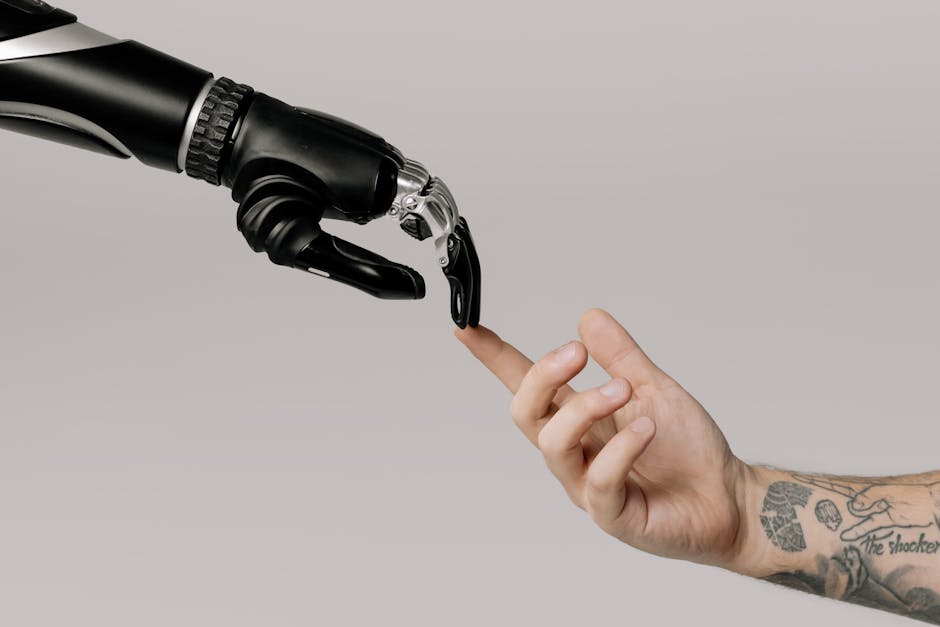
Real Time Demands Are Outpacing the Cloud
The sheer amount of data modern systems generate is no longer manageable with just centralized cloud infrastructure. Drones, sensors, smart cameras, and connected machinery pump out information constantly. Sending that all back to the cloud for processing introduces latency and in mission critical scenarios, even a few seconds is too much.
At large scale, both bandwidth and speed become serious limiting factors. The cloud can’t react in real time if it’s always stuck receiving and responding across long network paths. That’s where the system breaks down.
For use cases like autonomous vehicles, factory robotics, and security systems, milliseconds matter. These edge applications need to make decisions on the spot. Swerving to avoid a pedestrian. Halting a production line. Flagging a threat during a live video feed. There’s no time to wait on a server farm halfway across the country.
That’s why the focus is shifting. Real time demands are pushing intelligence closer to where the data is born at the edge.
What Edge AI Actually Means
Edge AI isn’t just about taking AI models and running them closer to where data is generated it’s about unlocking speed, autonomy, and responsiveness. Instead of sending everything back to a remote server for analysis, the computation happens on site, often in real time. We’re talking milliseconds, not minutes.
This shift means edge devices like sensors, cameras, and vehicles aren’t just collecting data anymore. They’re analyzing it, making decisions, and acting on it immediately. It’s brains on the ground, not just eyes.
And these devices aren’t lightweight either. Thanks to on board hardware like GPUs and TPUs, they’re fully capable of running complex models that used to be reserved for high power servers. That turns a smart camera into a security analyst, or a factory sensor into a QC inspector, all on its own.
The bottom line: Edge AI is bringing intelligence to where it’s most needed right at the source.
Speed: The cloud is fast until it isn’t. When data has to travel from your device to a server and back, even a short delay can break real time use cases. Edge AI skips the commute. It processes data where it’s generated, shaving off crucial milliseconds. For anything that relies on timing like autonomous navigation or real time video analytics those milliseconds matter.
Privacy: Keeping data local means fewer eyes on it. Whether it’s health metrics, facial recognition feeds, or location tracking, Edge AI lets devices make decisions without firing that data off to who knows where. For sectors where compliance and user trust are mission critical, this isn’t just a perk it’s a requirement.
Reliability: No signal? No problem. Edge systems keep functioning even if they lose connection to the cloud. Think about a drone mapping a wildfire zone or a machine monitoring factory vibrations deep in rural terrain. Cloud dropout shouldn’t, and doesn’t, mean total shutdown.
Efficiency: Every round trip to the cloud burns bandwidth and racks up compute costs. Edge AI trims that fat. By handling inference locally, businesses save data, dollars, and energy an easy win when deploying at scale.
Use Cases Where Edge AI Wins

Edge AI isn’t just a theoretical improvement it’s already driving measurable results in high stakes industries. These real world applications show why on device intelligence matters in moments where action needs to happen fast, and downtime isn’t an option.
Industrial Environments: Predictive Maintenance on Remote Oil Rigs
Challenge: Remote location, limited connectivity, high costs of unplanned downtime
Solution: Sensors embedded in equipment use Edge AI to detect anomalies and predict failures in real time
Result: Maintenance can be scheduled proactively, avoiding costly breakdowns and improving safety
Financial Security: Real Time Fraud Detection in Mobile Payments
Challenge: Detecting and stopping fraudulent transactions as they happen on user devices
Solution: Lightweight machine learning models run directly on smartphones and point of sale terminals
Result: Users receive instant alerts, and suspicious activity is halted before it can escalate
Urban Mobility: Smart Traffic Controls Reacting to Live Flow
Challenge: Traffic patterns change constantly and unpredictably
Solution: Cameras and sensors analyze road conditions locally using Edge AI
Result: Traffic signals adjust instantly to improve flow, reduce congestion, and even prioritize emergency vehicles
Healthcare: On Premise Patient Monitoring
Challenge: Continuous monitoring of vital signs in environments where cloud access is limited or regulated
Solution: Edge powered devices analyze physiological signals from patients in real time
Result: Clinicians receive immediate alerts for irregularities, improving response time and care quality
Across sectors, the common theme is clear: when decisions need to happen now, Edge AI delivers.
Edge AI vs. Cloud: Which to Choose?
There’s no one size fits all answer here. Whether you go full edge, full cloud, or land somewhere in the middle depends on four things: how fast you need that data processed (latency), how private the data is (sensitivity), how much you’re willing to spend (cost), and how big you’re trying to scale (scope).
If milliseconds matter like in autonomous driving or live security alerts edge is mandatory. You need decisions made where the data lives. If your operation is massive but not time urgent, like batch processing customer behavior patterns, cloud is still king. When the application needs both speed and centralized insights a hybrid setup often makes the most sense.
Hybrid models are gaining traction because they offer flexibility: compute locally for speed, but sync with the cloud for long term trends and heavy analytics. The trick is designing with intent, not defaulting to one approach.
For a deeper comparison, check the full breakdown: edge vs cloud.
Looking Ahead
Edge AI is going custom. Expect a wave of purpose built chips smaller, faster, and optimized for edge inference to hit the market in 2024. These chips aren’t just scaled down versions of cloud processors. They’re designed from the ground up to crunch data locally, using less power but delivering decisions faster. Companies building robots, drones, or on premise analytics systems are already lining up.
Adoption is picking up across sectors that live and die on speed: robotics in warehouses, real time inventory tracking in retail, and smart routing in logistics fleets. These aren’t pilot programs anymore. They’re production grade systems relying on edge AI to trim costs and improve response time.
But it doesn’t mean the cloud gets sidelined. What’s emerging is a hybrid edge cloud model. AI models train in the cloud where resources are abundant. Then inference happens at the edge, where milliseconds matter. It’s about flexibility, uptime, and scale all at once.
Edge AI doesn’t replace the cloud. It fills the gaps the cloud can’t reach fast enough. And that makes it key to how machines and businesses make split second decisions going forward.
 Johner Keeleyowns writes the kind of device optimization techniques content that people actually send to each other. Not because it's flashy or controversial, but because it's the sort of thing where you read it and immediately think of three people who need to see it. Johner has a talent for identifying the questions that a lot of people have but haven't quite figured out how to articulate yet — and then answering them properly.
They covers a lot of ground: Device Optimization Techniques, Tech Concepts and Frameworks, Doayods Edge Computing Strategies, and plenty of adjacent territory that doesn't always get treated with the same seriousness. The consistency across all of it is a certain kind of respect for the reader. Johner doesn't assume people are stupid, and they doesn't assume they know everything either. They writes for someone who is genuinely trying to figure something out — because that's usually who's actually reading. That assumption shapes everything from how they structures an explanation to how much background they includes before getting to the point.
Beyond the practical stuff, there's something in Johner's writing that reflects a real investment in the subject — not performed enthusiasm, but the kind of sustained interest that produces insight over time. They has been paying attention to device optimization techniques long enough that they notices things a more casual observer would miss. That depth shows up in the work in ways that are hard to fake.
Johner Keeleyowns writes the kind of device optimization techniques content that people actually send to each other. Not because it's flashy or controversial, but because it's the sort of thing where you read it and immediately think of three people who need to see it. Johner has a talent for identifying the questions that a lot of people have but haven't quite figured out how to articulate yet — and then answering them properly.
They covers a lot of ground: Device Optimization Techniques, Tech Concepts and Frameworks, Doayods Edge Computing Strategies, and plenty of adjacent territory that doesn't always get treated with the same seriousness. The consistency across all of it is a certain kind of respect for the reader. Johner doesn't assume people are stupid, and they doesn't assume they know everything either. They writes for someone who is genuinely trying to figure something out — because that's usually who's actually reading. That assumption shapes everything from how they structures an explanation to how much background they includes before getting to the point.
Beyond the practical stuff, there's something in Johner's writing that reflects a real investment in the subject — not performed enthusiasm, but the kind of sustained interest that produces insight over time. They has been paying attention to device optimization techniques long enough that they notices things a more casual observer would miss. That depth shows up in the work in ways that are hard to fake.