
You’ve seen it happen.
A poster you spent hours on gets ignored.
Or worse (scrolled) past in under one second.
I’ve watched people stare blankly at posters I designed ten years ago. Then I redesigned them using the same tools but different thinking. Same printer.
Same paper. Different results.
Most posters fail because they look nice instead of working hard. They decorate. They don’t communicate.
And visual hierarchy? Forgotten.
I’ve designed posters that filled classrooms, packed event halls, and moved people to sign petitions.
Not by adding more color or fonts. But by cutting everything that didn’t serve the message.
This isn’t about software shortcuts.
It’s about how to think before you click.
You’ll learn how to build a poster that stops eyes and moves feet. Step by step. No fluff.
No theory without action.
How to Design a Poster Graphic Design Gfxdigitational starts here. With intention, not decoration.
I’ve done this hundreds of times.
You’ll do it right the first time.
The 3 Poster Rules You Ignore at Your Peril
I’ve seen hundreds of posters fail. Not because they looked ugly. Because they ignored the triad.
Clear purpose means one action only. Register. Scan.
Call. Not “engage with our brand.” (That’s corporate nonsense.)
Who sees it (and) where. Matters more than font choice. A poster in a hallway needs different info than one taped to a fridge.
Skip this, and your design vanishes into background noise.
Single-message focus isn’t optional. It’s the law. One idea.
No exceptions. I once redesigned a clinic poster “Get Well,” “Prevent Illness,” and “Ask About Our New Hours.” It got zero sign-ups. We changed it to “Book Your Flu Shot: Walk-Ins Welcome Tues.
Thurs.” Sign-ups jumped 220%.
Eye-catching isn’t loud. It’s strategic. Contrast.
Whitespace. Arrows or gaze direction that pulls the eye in under three seconds. If you’re relying on neon pink to grab attention, you’ve already lost.
This guide covers all three foundations in depth. read more
A poster without purpose is decoration. Without audience alignment, it’s wallpaper. Without singular focus, it’s noise.
I’ve watched people spend hours on gradients and kerning (then) blow the headline. Don’t be that person.
“How to Design a Poster Graphic Design Gfxdigitational” isn’t about tools. It’s about discipline.
Clutter isn’t caused by bad software. It’s caused by unclear thinking.
Typography That Commands Attention. Without a Font Library
I use two fonts. Exactly two. One for headlines. One for body. No more.
That’s the 2-font maximum rule. And it’s non-negotiable.
More than two fonts? You’re not being creative. You’re being lazy.
Or worse: you’re confusing people.
Headlines need boldness, high contrast, and tight tracking. Body text needs breath: generous line height, tall x-height, and 24pt+ for print at arm’s length.
You think Montserrat Bold + Open Sans Regular works? Good. It does.
Because their weights align and their moods don’t fight.
But try pairing Montserrat Bold with Comic Sans Regular? (Yeah, I cringed too.) Mood clash. Weight mismatch.
X-height disaster.
Test pairings side-by-side. Print them. Hold them at reading distance.
Ask: Can I read this without squinting? Without pausing?
Decorative fonts in body text? Stop. Just stop.
They belong only in headlines. And only at 60pt+, with serious padding.
How to Design a Poster Graphic Design Gfxdigitational starts here: restraint, not decoration.
Pro tip: If you’re unsure, pick one font family with multiple weights. Use Bold for headlines. Regular or Light for body.
Done.
No library needed. No justification required.
Color & Contrast: The Silent Conversion Tool You’re Ignoring
I open dev tools and check contrast every time. Not because I love rules. But because 4.5:1 isn’t optional.
It’s the WCAG AA minimum for body text. Try #333 on #fff. Good.
Now try #777 on #fff. Fails. Instantly.
You can test it live in Chrome: right-click → Inspect → Elements tab → select text → Computed → scroll to “Contrast ratio”.
Here’s my 4-color system:
Dominant (60%): your base background or primary type color
Secondary (25%): supporting UI, headings, borders
Accent (10%): buttons only. nothing else
Neutral (5%): grays for disabled states or fine print
Red means “stop”. Unless your button says “Download now” and has no timer. Then it’s just noise.
Hue alone doesn’t communicate. Context does.
Before printing, verify:
Text-background contrast ≥ 4.5:1
No more than 3 hues in active use
Accent color appears only on CTA elements
Where Do Most Graphic Designers Work Gfxdigitational? Many are stuck tweaking palettes instead of shipping posters that convert. Don’t be one of them.
How to Design a Poster Graphic Design Gfxdigitational starts with contrast. Not fonts, not layout, not stock photos.
Test your palette before you add a single icon. Your audience won’t read what they can’t see. Period.
Layout Hacks That Work (Even) If You’re Not a Designer
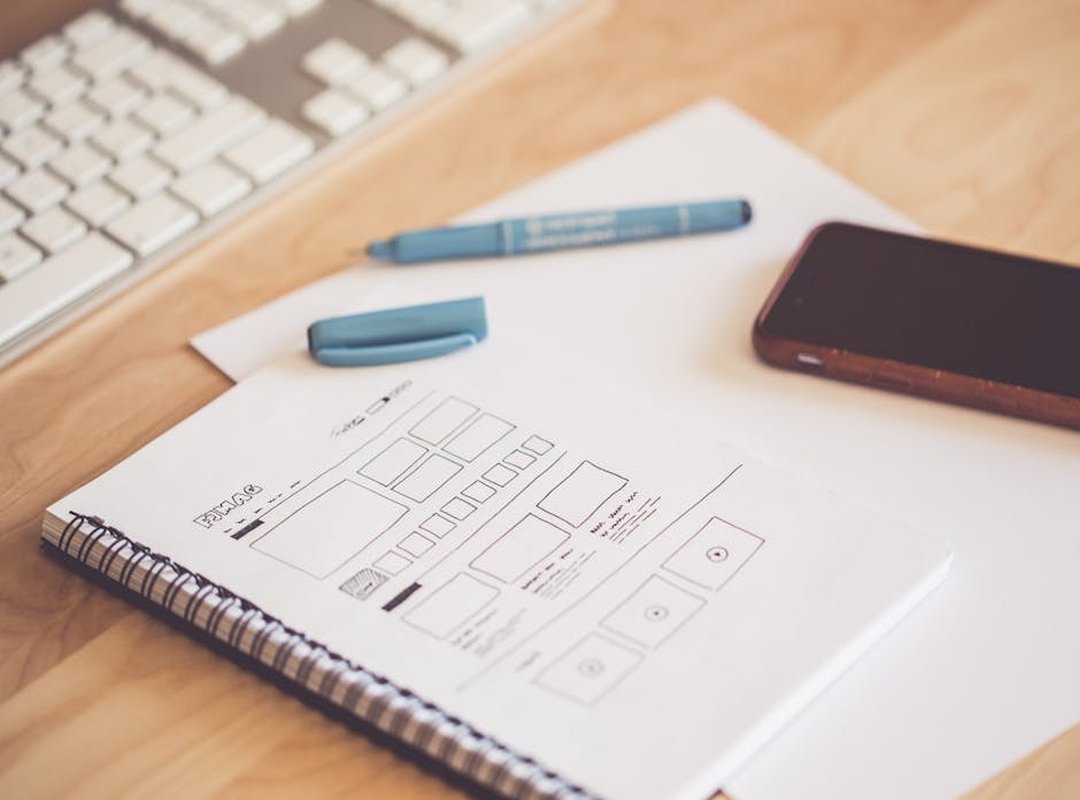
I used to think good layout needed design school. Turns out it needs Z-Pattern + Focal Point.
Your eyes scan like a Z: top-left → top-right → bottom-left → bottom-third. So put your strongest visual or headline right there (dead) center in the bottom third. Not top.
Not middle. Bottom third. (Yes, I checked eye-tracking studies.)
Line height? 1.5x your font size. Paragraph spacing? 3x. Section breaks? 5x.
Measure it. Don’t guess. I keep a sticky note on my monitor with those numbers.
The 10-foot test is real. Stand back. Can you read the main message?
If not, cut text. Don’t add shadows or gradients. Bigger type and less copy always win.
I use three grids daily:
- One-column for posters or social banners
- Two-column asymmetrical (70/30 split) for flyers
Sketch guides live in my Dropbox. I print them and trace over layouts before opening any software.
How to Design a Poster Graphic Design Gfxdigitational starts here. Not with fonts or colors, but with where the eye lands first.
You’re not designing for the screen. You’re designing for the person standing in front of it.
That’s why spacing rules matter more than filters.
Try the Z-pattern tomorrow. Just once.
See if your message hits faster.
From Draft to Done: Your 5-Minute Pre-Print Checklist
I print posters for real clients. Not mockups. Not PDFs on screen.
Actual paper that gets taped to walls and handed out at events.
So here’s what I always check before hitting “print”:
- Bleed setup (3mm). No exceptions
- CMYK mode (not RGB). Your printer isn’t a monitor
- 300 DPI resolution (anything) less looks fuzzy up close
- Embedded fonts. Yes, even the ones you think are “standard”
- Exported as PDF/X-1a. Not just “PDF”
Auto-crop? It’ll slice off your headline. Color profile mismatches?
Your lively blue becomes muddy gray. Unembedded images? Blank zones where your hero photo should be.
Then I do the human test: hand the draft to someone who didn’t work on it. Ask them: What’s the main message? What should they do next? If they hesitate (or) worse, guess (it’s) not ready.
A poster isn’t finished when it looks good.
It’s done when it achieves its behavioral goal.
That’s why Gfxdigitational exists. To keep this checklist sharp and real.
How to Design a Poster Graphic Design Gfxdigitational starts here.
Your First Poster Starts Now
I’ve seen too many posters vanish into noise. Wasted time. Wasted budget.
Zero action.
You know that sinking feeling when your message lands flat. That’s not your fault. It’s bad filters.
So use the three foundations (purpose,) audience, message (as) your only checklist.
Nothing else gets through.
Skip the decoration. Skip the guesswork. Just pick one poster you’ll redesign this week.
Use only the typography and layout rules from sections 2 and 4.
No overthinking. No new tools. Just clarity.
How to Design a Poster Graphic Design Gfxdigitational is not about looking pretty.
It’s about being seen, understood, and acted on.
Your message matters.
Make sure it lands.
Redesign that one poster today. Do it before lunch. Then tell me what changed.
 Johner Keeleyowns writes the kind of device optimization techniques content that people actually send to each other. Not because it's flashy or controversial, but because it's the sort of thing where you read it and immediately think of three people who need to see it. Johner has a talent for identifying the questions that a lot of people have but haven't quite figured out how to articulate yet — and then answering them properly.
They covers a lot of ground: Device Optimization Techniques, Tech Concepts and Frameworks, Doayods Edge Computing Strategies, and plenty of adjacent territory that doesn't always get treated with the same seriousness. The consistency across all of it is a certain kind of respect for the reader. Johner doesn't assume people are stupid, and they doesn't assume they know everything either. They writes for someone who is genuinely trying to figure something out — because that's usually who's actually reading. That assumption shapes everything from how they structures an explanation to how much background they includes before getting to the point.
Beyond the practical stuff, there's something in Johner's writing that reflects a real investment in the subject — not performed enthusiasm, but the kind of sustained interest that produces insight over time. They has been paying attention to device optimization techniques long enough that they notices things a more casual observer would miss. That depth shows up in the work in ways that are hard to fake.
Johner Keeleyowns writes the kind of device optimization techniques content that people actually send to each other. Not because it's flashy or controversial, but because it's the sort of thing where you read it and immediately think of three people who need to see it. Johner has a talent for identifying the questions that a lot of people have but haven't quite figured out how to articulate yet — and then answering them properly.
They covers a lot of ground: Device Optimization Techniques, Tech Concepts and Frameworks, Doayods Edge Computing Strategies, and plenty of adjacent territory that doesn't always get treated with the same seriousness. The consistency across all of it is a certain kind of respect for the reader. Johner doesn't assume people are stupid, and they doesn't assume they know everything either. They writes for someone who is genuinely trying to figure something out — because that's usually who's actually reading. That assumption shapes everything from how they structures an explanation to how much background they includes before getting to the point.
Beyond the practical stuff, there's something in Johner's writing that reflects a real investment in the subject — not performed enthusiasm, but the kind of sustained interest that produces insight over time. They has been paying attention to device optimization techniques long enough that they notices things a more casual observer would miss. That depth shows up in the work in ways that are hard to fake.